CNC vs Conventional Machines: When Automation Actually Pays Off
CNC or conventional? It's not about which is better — it's about fit. A practical guide to batch size, part complexity, break-even thinking and why many shops run both.
Anirudh Singla
Managing Director
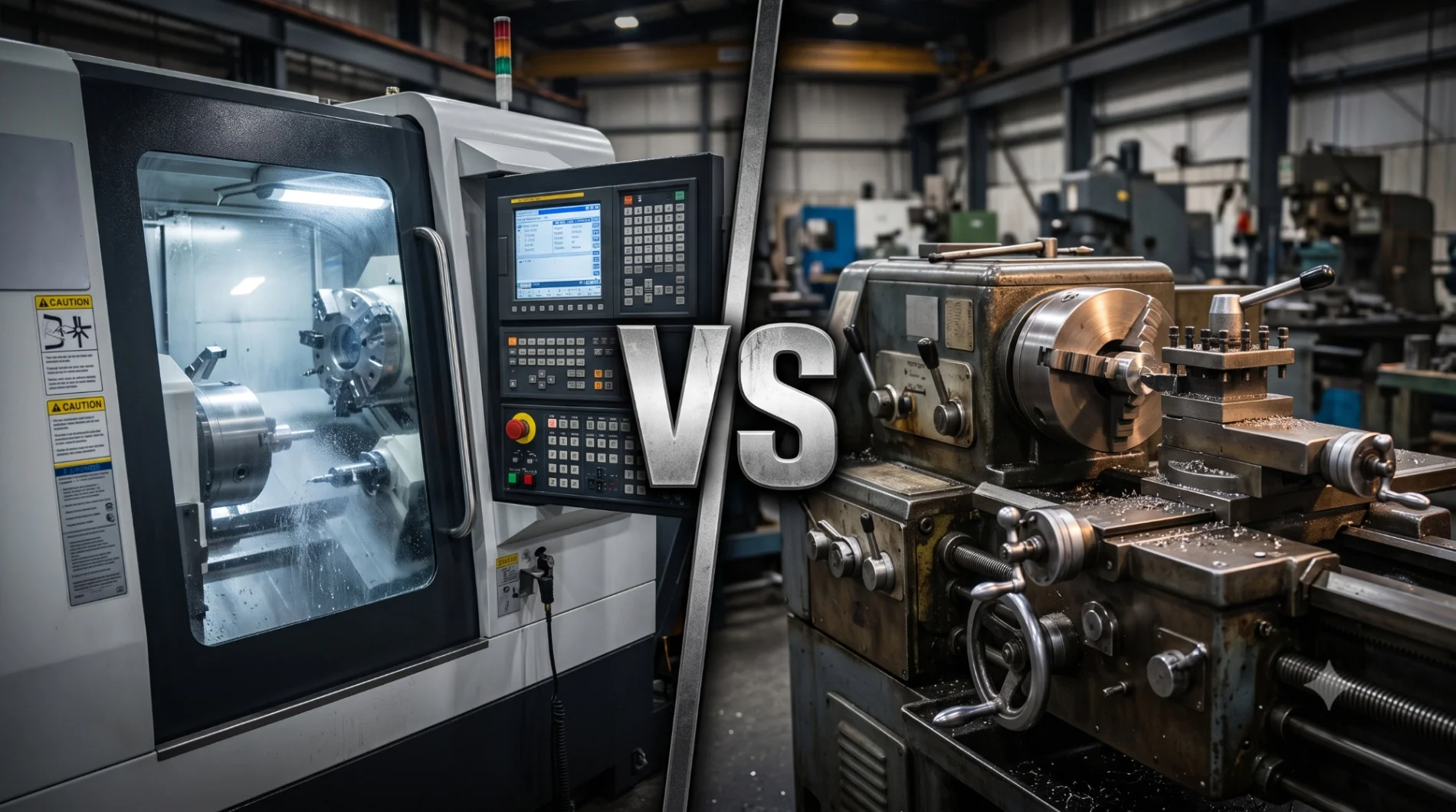
Walk into any machine shop and you'll hear the same debate: "Should we go CNC?" It's usually framed as old versus new, or good versus better. That framing misses the point. The real question isn't which machine is better — it's which machine fits the work you actually do: your batch sizes, your part complexity, and the people running your floor.
Here's a practical way to think it through.
Where Conventional Machines Still Win
Conventional lathes, milling machines and drilling machines have kept workshops running for decades, and for good reason.
Lower entry cost. A conventional machine asks far less of your capital, which matters when cash flow is tight or the order book is uncertain.
Simplicity. Fewer electronics, fewer things to go wrong. Mechanical faults are usually easy to diagnose and fix locally.
Flexibility for one-offs. For prototypes, single repair parts or small runs, a skilled operator can often finish the job on a manual machine before a CNC program is even written and proved out.
No programming dependency. You don't need a CAM operator or G-code knowledge. A trained machinist can walk up and start cutting.
Easier maintenance. Spares and mechanics for conventional machines are widely available, and downtime tends to be shorter.
If your work is mostly job-shop, low-volume or highly varied, conventional machines can remain the most sensible backbone of your shop.
Where CNC Earns Its Place
CNC machines shine the moment repeatability and consistency start to matter.
Repeatability. The hundredth part matches the first. Once a program is proven, dimensional variation drops sharply.
Precision on complex geometry. Contours, multi-axis features and tight tolerances that would be slow or risky manually become routine.
Unattended running. A CNC can keep cutting while one operator loads, measures or tends a second machine. That's where real productivity gains come from.
Less dependence on rare skills. Highly skilled manual machinists are harder to find every year. CNC shifts the skill to programming and setup, so a smaller core team can support more output.
Better for medium-to-high volume. When you're running the same part again and again, cycle time and consistency translate directly into capacity.
Break-Even Thinking: When Does CNC Pay for Itself?
There's no universal number, but there is a reliable way to reason about it. Ask yourself these questions:
How big are your batches? Every CNC job carries a fixed overhead — programming, setup, first-off inspection. Spread across 5 parts, that overhead hurts. Spread across 500, it nearly disappears.
How complex are the parts? The more operations, contours or tight tolerances a part has, the more time a manual operator spends — and the more a CNC saves, even at smaller batch sizes.
Do orders repeat? Repeat orders are where CNC quietly wins. Once a program is saved and proven, re-running the job months later takes a fraction of the original setup effort.
What does scrap and rework cost you? If rejections from manual variation are eating into margins or customer trust, CNC's consistency has a real value beyond speed.
Is skilled labour a bottleneck? If you're turning down work because you can't staff manual machines, automation may pay off through capacity alone.
As a rule of thumb: low-volume, simple, non-repeating work leans conventional. Medium-to-high volume, complex or repeating work leans CNC. Most shops sit somewhere in between.
The Hybrid Shop Floor
That middle ground is exactly why many of the most successful shops don't choose at all — they run both.
A common setup looks like this:
Conventional machines handle setup work, fixture making, prototypes, urgent repairs and one-off jobs.
CNC machines handle the production runs — the repeat orders and complex parts where consistency matters most.
This keeps CNC busy on the work that justifies them, while manual machines absorb the varied jobs that would otherwise interrupt production. It also lets a shop step into automation gradually, rather than betting everything on one big change.
Buying Used: A Lower-Risk Way to Try Automation
For many shop owners, the biggest hurdle isn't deciding CNC makes sense — it's the capital outlay of a brand-new machine. That's where good used machinery changes the equation.
A well-maintained used CNC lets you test automation on real production work without committing to new-machine investment. If you're expanding your conventional side instead, a quality used lathe or mill adds capacity at a sensible cost. Either way, you're matching the machine to the work — not the other way around.
At Machine City, we deal in used CNC and conventional machinery for industrial buyers across India. We'll talk you through what fits your volumes, part mix and floor space — no pressure, no hard sell.
Thinking about your first CNC, or adding capacity to your shop? Reach out via WhatsApp or send an enquiry through our website, and our team will help you find the right machine for your work.
Anirudh Singla· Managing Director
Managing Director at Machine City. 16 years of experience in used CNC and industrial machinery trading.