How to Inspect a Used CNC Turning Center Before Buying: A Practical Buyer's Guide
A practical, no-nonsense checklist for buying a used CNC turning center — the specs that matter, the inspection points that reveal real wear, and the questions to ask before you commit.
Anirudh Singla
Managing Director
Why Buy a Used CNC Turning Center?
A well-maintained CNC turning center from an established builder can deliver decades of productive service. For most job shops and production units, a used machine means a much lower capital outlay, faster delivery than a new machine on order, and access to proven, rigid machines — often imported models built to standards that hold up well over time. At Machine City, we source used turning centers from Canada, the USA, and Singapore, inspect them before listing, and share full details so you can evaluate each machine on its merits.
Key Specifications to Check
Match these specifications to the parts you actually run before you shortlist any machine:
Chuck size — Usually 6", 8", 10", or 12". It sets the workpiece diameter you can grip securely; oversizing wastes spindle capacity, undersizing limits your job range.
Bar capacity (spindle bore) — For bar work, the spindle through-hole decides your maximum bar stock. Check the draw tube bore too, as it is often slightly smaller than the quoted spindle bore.
Maximum turning diameter and length — The real working envelope. Compare against your largest routine job, not your largest-ever job, and leave a working margin.
Turret stations — 8, 10, or 12 are common. More stations mean fewer tool changes and more capacity for complex parts.
Live tooling and Y-axis — Driven tooling lets you mill, drill, and tap off-centre features without a second machine; a Y-axis adds off-centreline capability. Both add cost, so confirm you actually need them.
Sub-spindle — Allows done-in-one machining of both ends of a part. Valuable for high-volume production, often unnecessary for general job work.
Tailstock — For long shaft work, check whether the machine has a tailstock, whether it is programmable or manual, and its quill diameter and stroke.
Condition and Inspection Checklist
These are the checks that reveal the true condition of a used turning center:
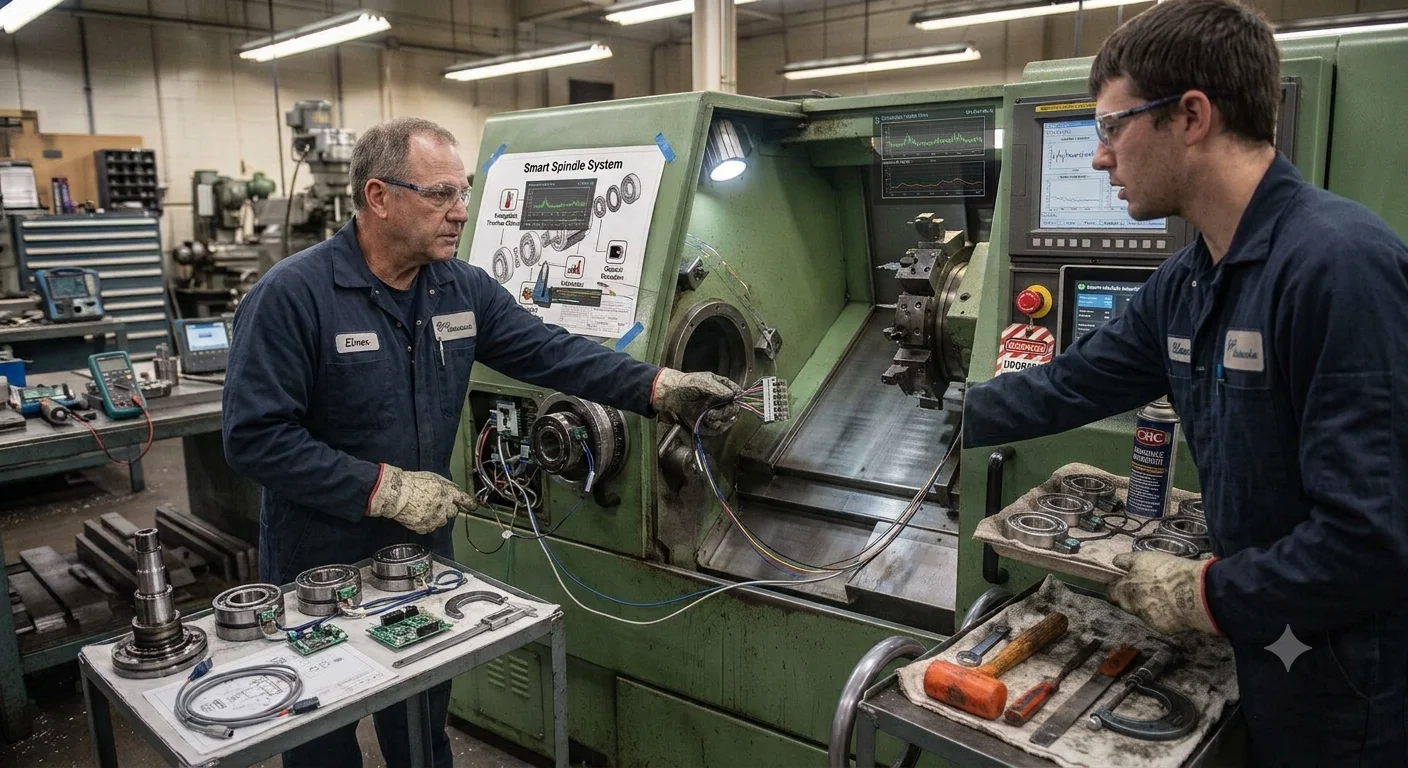
Spindle runout — Measure runout at the chuck nose with a dial indicator. Excessive runout points to bearing wear, and spindle rebuilds are among the costliest repairs.
Chuck condition — Inspect jaw movement, clamping force, and wear on the master jaws and the scroll or wedge mechanism.
Turret indexing — Cycle the turret through every station. It should index quickly, lock positively, and repeat position without alarms. Check the turret face for crash damage.
Way and slide wear — Look at wipers, way covers, and any visible way surfaces. Test backlash with a test cut or by checking servo load across travel.
Tailstock function — Confirm quill movement, alignment with the spindle centreline, and clamping.
Hours and age — Ask for power-on hours and, more importantly, cutting hours. Cutting hours tell you far more about real wear than machine age.
Control system — Boot the control, jog all axes, review the error history, and confirm the control model (Fanuc, Siemens, Mitsubishi, and so on) is still supported for parts and service in India.
Wherever possible, watch the machine cut a part under power. A test cut reveals more than any spec sheet.
Questions to Ask the Seller
What work was the machine doing, and in what material? Steel roughing wears a machine faster than aluminium finishing.
How many owners has it had, and is service history available?
Have the spindle, turret, or ball screws ever been repaired or replaced?
Has the machine ever been in a crash? What was damaged, and how was it repaired?
Are the manuals, tooling, chuck jaws, and accessories included?
Is the machine still under power and available for inspection or a test cut?
Why Buy a Used Turning Center Through Machine City
Machine City is a family-run machinery business based in Mohali, Punjab, dealing in used CNC and industrial machinery for over a generation. Every turning center we list is inspected before it goes up, with detailed specifications and honest photographs — what you see is what arrives at your shop. We import machines directly from Canada, the USA, and Singapore, giving our buyers access to well-maintained machines from markets known for disciplined upkeep.
We do not list prices publicly and we do not pressure buyers. When a machine interests you, reach out over WhatsApp or send an enquiry, and we will share commercials, current condition details, extra photos or videos, and answer your technical questions directly. If we do not have the right turning center in stock, tell us your requirement and we will source it for you.
Anirudh Singla· Managing Director
Managing Director at Machine City. 16 years of experience in used CNC and industrial machinery trading.