How to Inspect a Used Drill Machine Before Buying: A Practical Buyer's Guide
A practical guide to buying a used drilling machine: the key specs to check, a spindle-and-alignment inspection checklist, the right questions to ask a seller, and how Machine City sources and inspects used drills.
Anirudh Singla
Managing Director
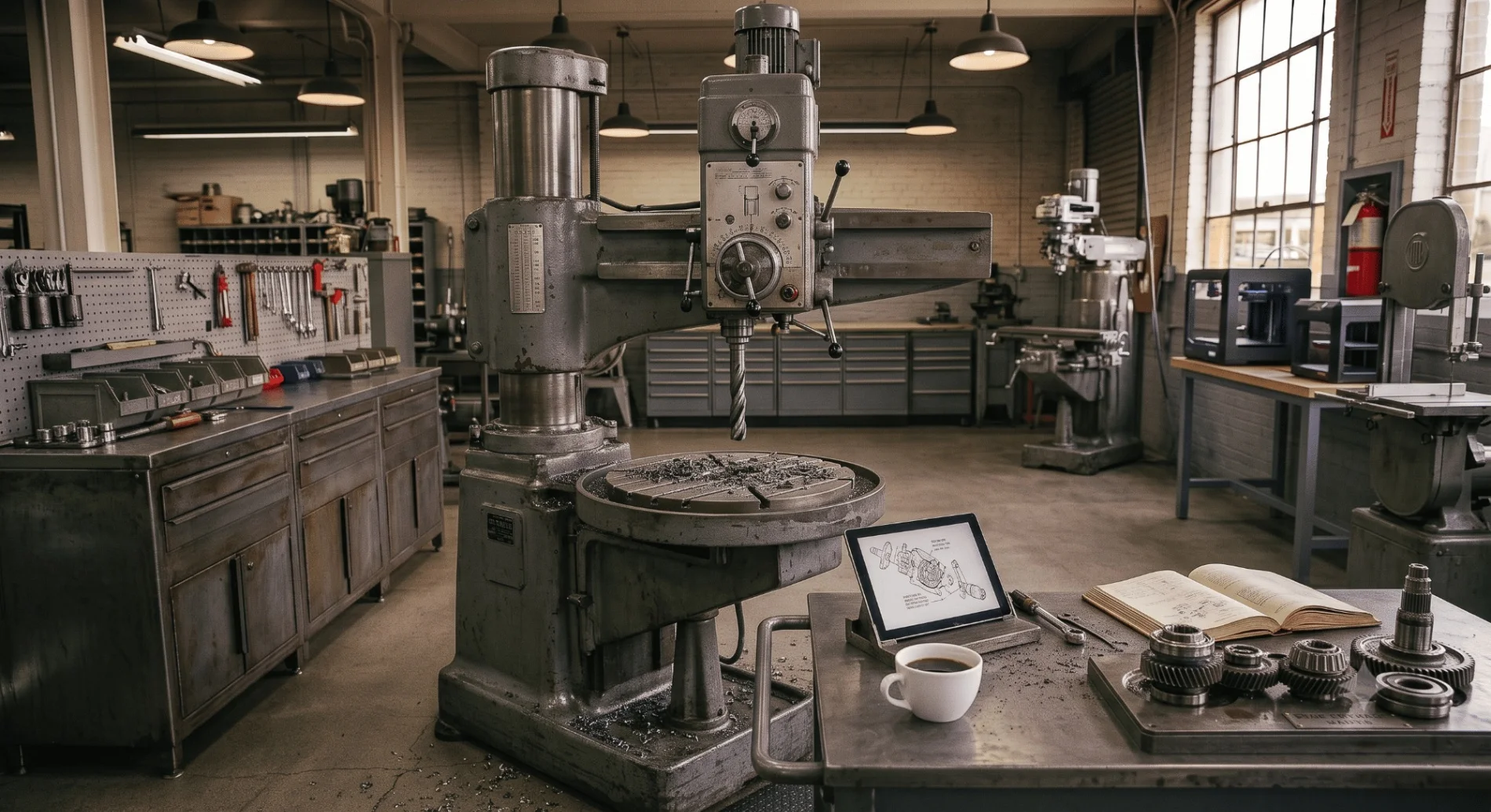
A drilling machine is one of the hardest-working tools on any shop floor, and it is also one of the most sensible machines to buy used. The core mechanics — a rigid column, a geared or belt-driven spindle, and a controlled feed — are proven, long-lived, and easy to inspect. A well-maintained used drill press or radial drill will hold accuracy for years at a fraction of the cost of new, which is why so many production shops, fabrication units, and tool rooms build their capacity on quality second-hand machines. At Machine City, we stock inspected used drilling machines across pillar, bench, and radial types, sourced both from Indian industry and imported from Canada, the USA, and Singapore.
Key specs to check before you buy
Start by matching the machine to your actual work, not the biggest number on the plate. The specifications that matter most are:
Maximum drilling capacity in mild steel. This is the headline figure — for example, 25 mm, 40 mm, or 50 mm in solid mild steel. It tells you the largest hole the spindle and motor can comfortably drive. Buy for your heaviest realistic job, with a little margin.
Radial vs. pillar or bench type. A radial drilling machine, with its arm that swings and moves in and out, is built for large, heavy workpieces where you bring the spindle to the work. A pillar (floor) or bench drill is simpler and ideal for smaller, repetitive components. Choose the type that fits how your parts are handled.
Spindle travel (quill stroke). This limits how deep you can drill in a single feed. Check it against the deepest holes you run.
Table size and column-to-spindle throat. These define the largest part you can position and how far from the column you can reach. On radial machines, note the arm length and the maximum radius.
Motor power and number of speeds. More spindle speeds (and a good speed range) let you drill everything from small holes in steel to large holes in soft materials at the correct surface speed. Confirm the motor rating suits your power supply and duty.
Condition and inspection checklist
Because the mechanics are straightforward, a careful inspection tells you almost everything:
Spindle runout. Mount a dial indicator and check runout at the spindle nose and taper. Excessive runout means worn bearings or a damaged taper and shows up as oversized or wandering holes.
Column and table alignment. Check that the table sits square to the spindle and that it raises, lowers, and swivels smoothly without excessive play. On radial machines, test the arm elevation and the clamping of the arm and head.
Feed mechanism. Work the quill through its full travel by hand and under power. It should move smoothly with no notchiness, and the auto-feed (if fitted) should engage and hold cleanly.
Bearings and spindle noise. Run the spindle across its speed range and listen for rumble, whine, or vibration.
Overall hours, age, and maintenance. Ask how the machine was used, whether it ran single- or multi-shift, and whether it was regularly lubricated and serviced.
Questions to ask the seller
Get the practical history before you commit. Useful questions include: What was this machine used for, and how heavily? Is it single-phase or three-phase, and what motor rating? When were the spindle bearings last checked or replaced? Are the original chuck, arbor, taper sleeves, and coolant system included? Is it currently powered up and available to see running? For imported machines, ask about the country of origin and the condition on arrival.
Why buy a used drilling machine through Machine City
With 16+ years in the trade and over 5,000 machines handled, our team inspects every machine before it reaches you, so you know what you are getting rather than gambling on a photo. We source both from Indian industry and through direct imports from Canada, the USA, and Singapore, which means we can often find a specific capacity or type that is hard to locate locally. Our process is built around clear information and no pressure: you send an enquiry, we share condition details and answer your technical questions, and you decide in your own time. When you find a drilling machine that fits your shop, reach out via WhatsApp or send an enquiry and our team will help you take it forward.
Anirudh Singla· Managing Director
Managing Director at Machine City. 16 years of experience in used CNC and industrial machinery trading.