How to Inspect a Used Surface Grinder Before Buying: A Practical Buyer's Guide
A practical guide for shop owners and production managers evaluating a used surface grinder — the key specs to check, a condition and inspection checklist, the questions to ask a seller, and how Machine City sources and inspects imported machines.
Anirudh Singla
Managing Director
Why a Used Surface Grinder Makes Sense
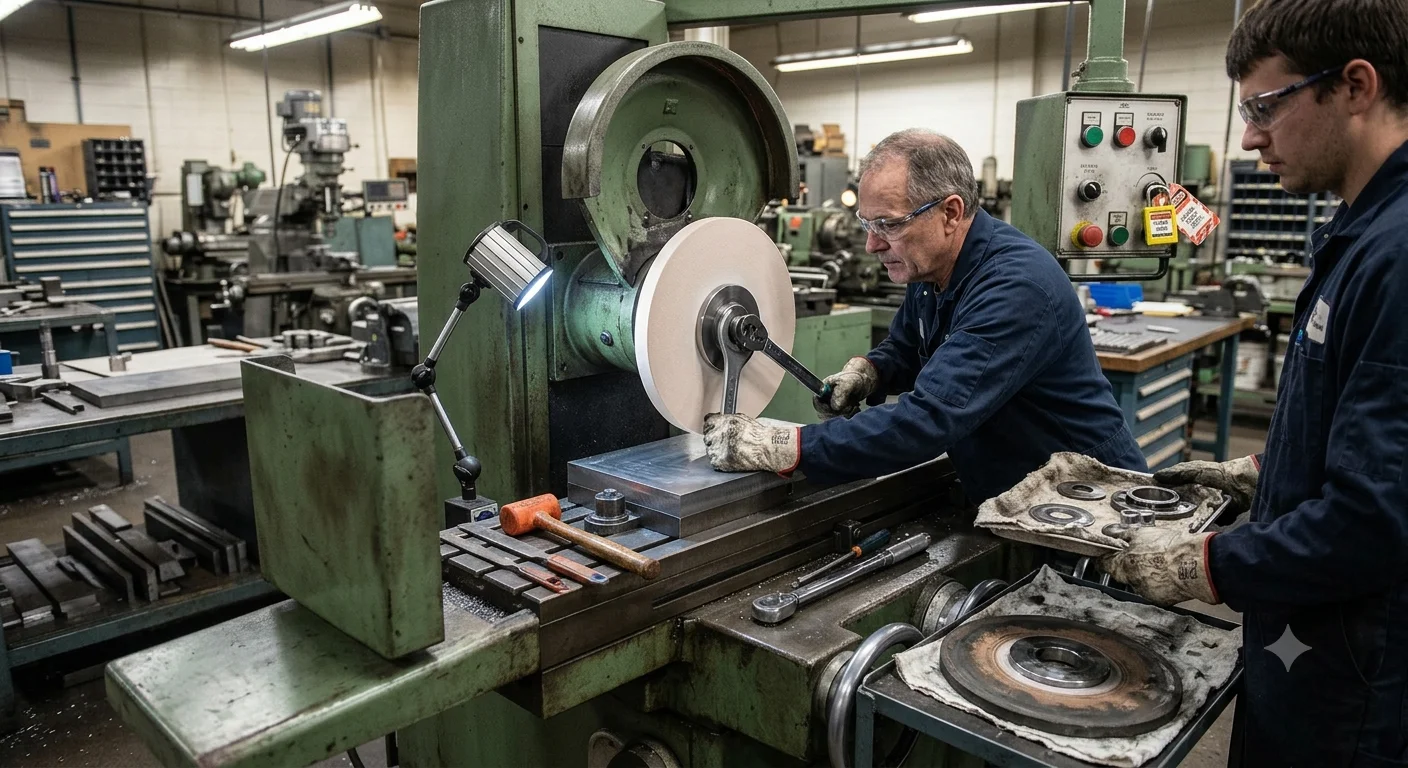
A surface grinder is often the last machine a part touches before it ships, so precision matters more here than almost anywhere else on your shop floor. Surface grinders are mechanically simple, built heavy, and tend to age well — a properly maintained older machine from a reputable builder will often outperform a new budget one. That makes the used market a smart place to buy, provided you know what to check. Machine City sources used surface grinders through imports from Canada, the USA, and Singapore, inspects them before listing, and helps you match the right machine to your work.
Key Specifications to Check
Before you shortlist any machine, be clear on what your parts actually need:
Table size (working area): The most important spec. Your largest workpiece, plus fixturing, must fit comfortably — sizes run from small bench machines to large die-and-mould beds.
Longitudinal and cross travel: Confirm the wheel can cover the full table, not just the table dimensions on paper. Some machines list a table larger than their usable grinding envelope.
Magnetic chuck size and type: Check whether the chuck is permanent-magnet or electromagnetic, and whether it is included. A missing or weak chuck is a real cost to replace.
Spindle power: Higher spindle power matters for heavier stock removal and larger wheels. For fine finishing of small parts, a smaller spindle is fine.
Maximum grinding height: The daylight from table or chuck face to the wheel. Tall workpieces or stacked fixtures run out of height quickly — measure your tallest job.
Manual vs. hydraulic vs. CNC: Manual suits toolrooms and low-volume precision work; hydraulic table feed is the production standard; CNC and PLC control add automatic downfeed and crossfeed for repeatable batch work. Buy the automation your volumes justify, not more.
Condition & Inspection Checklist
These are the points that separate a good used grinder from an expensive mistake:
Way wear and geometric accuracy: Wear on the table ways shows up as inconsistent flatness across the table length. Ask for a test grind on a full-length plate and check it with an indicator.
Spindle bearing condition: Listen for noise at running speed, check for vibration, and look at the finish it produces — chatter or a cloudy finish usually points to bearing wear, a significant repair.
Magnetic chuck function: Test holding power across the full chuck face and check the surface for deep marks or excessive regrinding — a chuck skimmed too many times may be near end of life.
Table flatness: Indicate the table and chuck face directly. Small deviations can be corrected by regrinding the chuck; twist or sag in the table itself is a structural problem.
Hours and age: Usage matters more than age. A lightly used older toolroom machine often beats a younger machine run three shifts in production.
Coolant system: Check the pump, tank, and filtration. Poor filtration circulates abrasive slurry over the ways — inspect for the damage it may already have caused.
Questions to Ask the Seller
Are original accessories included — wheel flanges, balancing arbor, dresser, spare wheels?
Can you provide a test grind and let me measure the result?
Can you show us Electrical Panel of the Machine ?
Is documentation available — manuals, accuracy charts, maintenance records?
A seller who answers these directly is telling you something about the machine. One who can't is telling you something too.
Why Buy Through Machine City
Machine City is a family-run business in Mohali, Punjab, dealing in used CNC and industrial machines. Every surface grinder we list is inspected before it goes up, and we source through direct imports from Canada, the USA, and Singapore — markets where machines are typically well-maintained and lightly used. We list full specifications and photographs honestly, including wear where it exists.
We don't publish prices, and that's deliberate: every used machine is different, and a fair figure depends on condition, accessories, and logistics to your location. When a machine interests you, reach out via WhatsApp or send an enquiry — you'll deal with us directly, get straight answers about condition, and can arrange an inspection before you commit. No pressure, no runaround.
Anirudh Singla· Managing Director
Managing Director at Machine City. 16 years of experience in used CNC and industrial machinery trading.