How to Inspect a Used VTL Before Buying: A Practical Buyer's Guide
A practical guide to buying a used Vertical Turret Lathe: the key specs to check, a VTL-specific inspection checklist, the questions to ask the seller, and how Machine City sources and inspects imported VTLs.
Anirudh Singla
Managing Director
Why Buy a Used VTL?
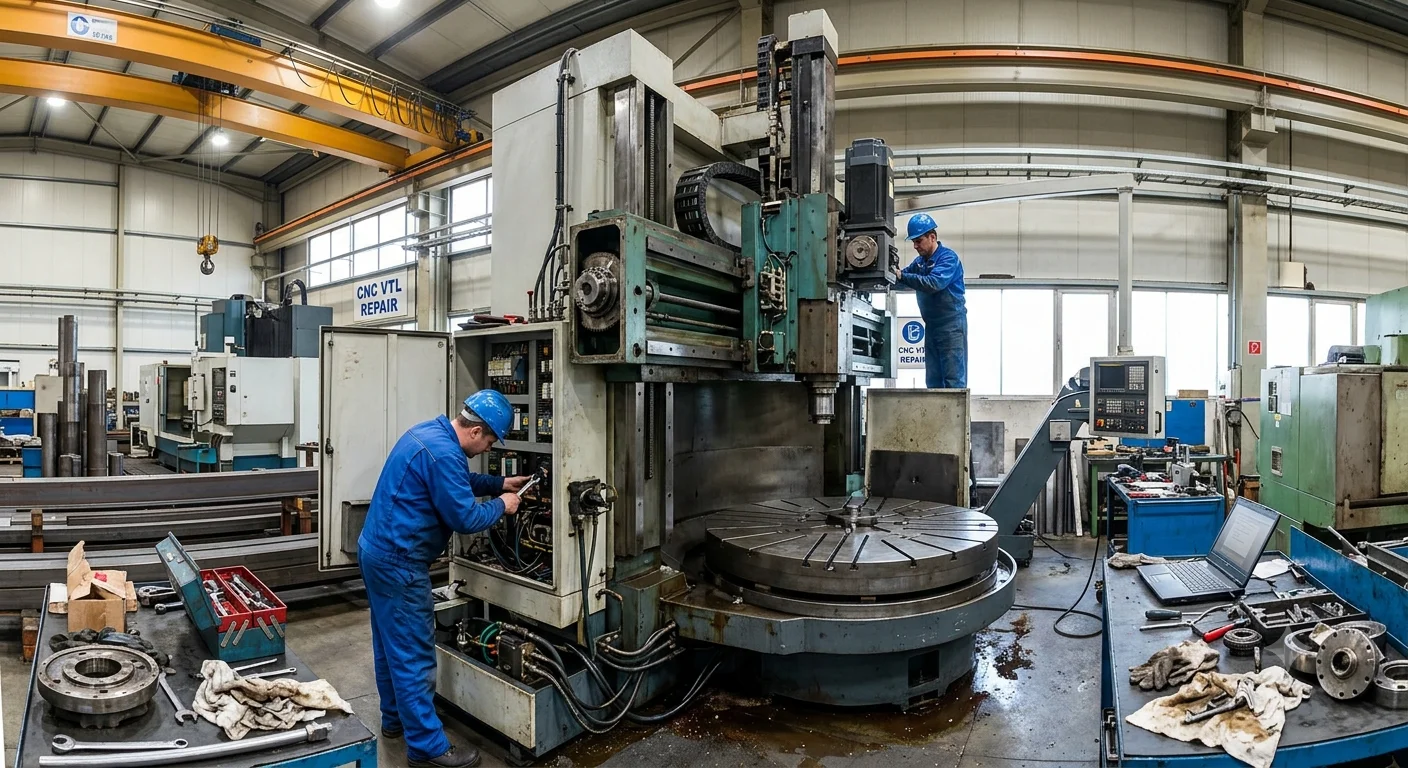
A Vertical Turret Lathe is a serious capital investment, and for most job shops and component manufacturers a well-maintained used VTL delivers the same large-diameter turning capability as a new machine at a fraction of the outlay. VTLs are built heavy by design — massive castings, oversized table bearings, rigid columns — so a machine with a documented service history often has decades of productive life left. At Machine City we source used VTLs from trusted sellers in India and import machines from Canada, the USA, and Singapore, inspecting each one before it reaches our listings.
Key Specifications to Check
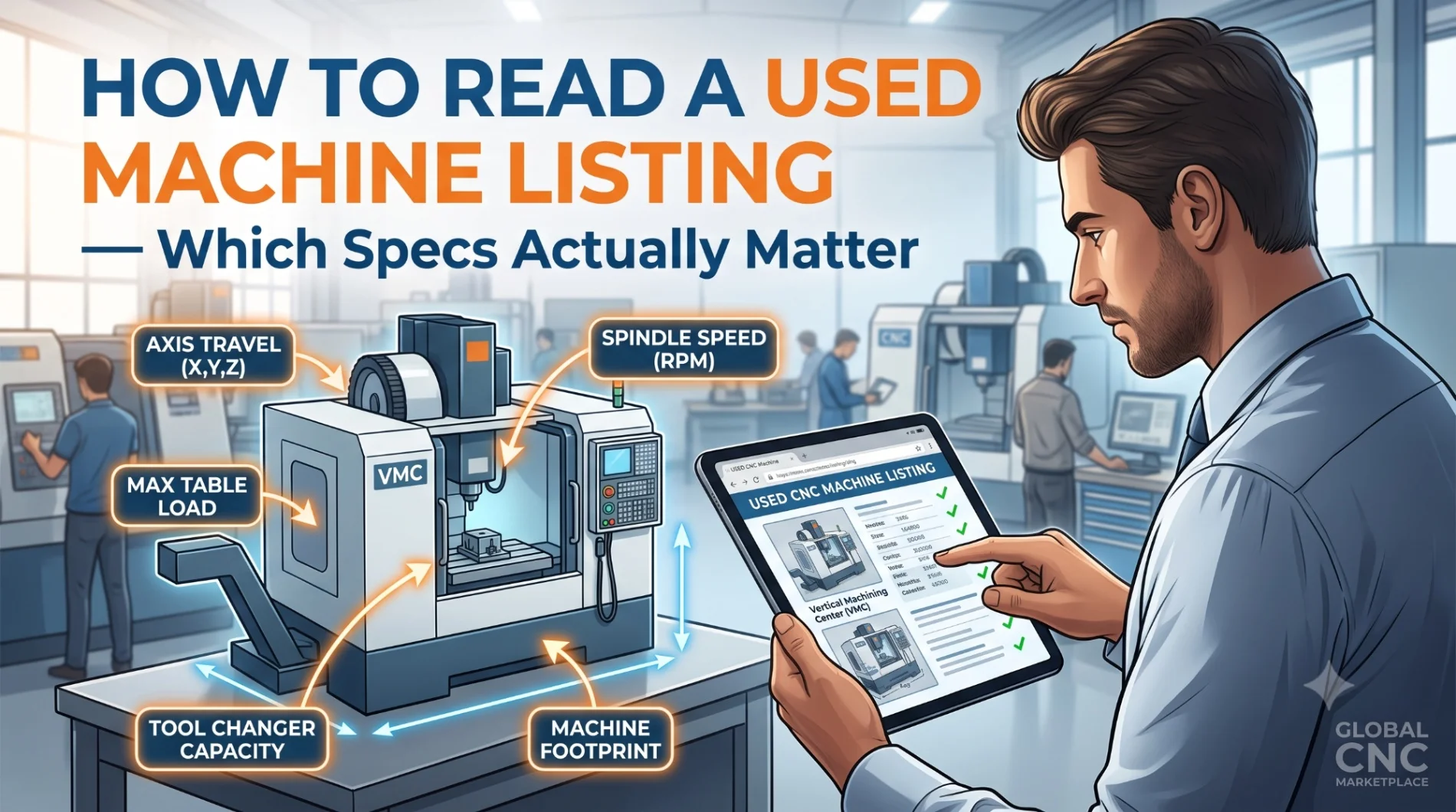
Match the machine to the parts you actually run, not just the biggest machine your floor can fit. Verify these specifications before shortlisting:
Table diameter — determines the chucking capacity for your workpieces; your largest regular job should sit comfortably within it.
Max swing — the largest workpiece diameter the machine can rotate, usually larger than the table itself; check against your biggest part envelope.
Ram travel / stroke — governs how deep the tool can reach into or along the workpiece; critical for tall components and deep boring.
Spindle / table drive power — higher power supports heavier depth of cut and harder materials; match it to your material-removal needs.
Number of rams / turrets — single-ram machines suit general work; twin-ram or ram-plus-side-turret configurations cut cycle times on production jobs.
Max workpiece height — the clearance under the rail limits part height; verify with your tallest job, including fixturing.
Table load capacity — heavy forgings and castings can exceed table ratings; confirm the rated weight capacity against your heaviest workpiece.
Also note the control system (Fanuc, Siemens, or conventional), the chuck or faceplate condition, and whether jaws and tooling are included in the sale.
Condition and Inspection Checklist
VTLs carry the entire workpiece weight on the table bearing, so inspection priorities differ from a horizontal lathe:
Table bearing wear — the single most expensive item to rectify. Listen for noise at various speeds, check runout with a dial indicator on the table, and ask about lubrication history. A worn table bearing can cost more to repair than the machine is worth.
Ram and column alignment — check ram squareness to the table and look for taper in test cuts. Misalignment shows up as inconsistent diameters along part height.
Way and slide wear — inspect crossrail, ram, and saddle ways for scoring, pitting, or uneven wear, and check backlash in the feed screws.
Hydraulic and clamping systems — verify chuck clamping pressure holds steady, look for leaks at cylinders and hoses, and test rail clamps and counterbalance systems.
Hours and age — total spindle hours matter less than how the machine was used. A high-hour machine on aluminium may be in better shape than a low-hour machine that roughed heavy steel castings.
Control system — power up the control, run all axes, and check the error history. For older controls, confirm spares and service support are still available in India.
Wherever possible, inspect the machine under power and take a test cut. If you cannot visit in person, ask for a video of the machine running with an indicator on the table.
Questions to Ask the Seller
What parts and materials was the machine running, and at what duty cycle?
Has the machine been rebuilt, retrofitted, or had major repairs, and by whom?
What is included: chuck, jaws, tooling, manuals, spare parts?
Can the machine be inspected under power before dispatch?
Why Buy a Used VTL Through Machine City
We are machinery people first — a family-run business based in Mohali, Punjab, dealing in used CNC and industrial machinery for years. Every VTL we list is checked before it goes live, and for imported machines we manage sourcing from Canada, the USA, and Singapore through to arrival in India, so you know exactly what you are getting and when.
We do not publish prices, and that is deliberate: every used machine's value depends on its condition, configuration, and logistics, so we would rather discuss your specific requirement than quote a number that fits nobody. There is no pressure and no obligation — send an enquiry or reach out via WhatsApp with the machine you are interested in, and we will share detailed photos, videos, specifications, and honest answers about condition.
If you do not see the VTL you need in our current inventory, tell us your requirement. We regularly source machines against specific buyer specifications.
Anirudh Singla· Managing Director
Managing Director at Machine City. 16 years of experience in used CNC and industrial machinery trading.